Residency conditions stall files when cards expire or copies are incomplete. What underwriters ask for from non-citizen borrowers and how processors clear it fast.
Not every borrower is a U.S. citizen, and that is fine for most loan programs. But when an application shows a permanent resident or non-permanent resident borrower, underwriters need proof of lawful residency before they will sign off. These residency documentation mortgage conditions are simple on paper, yet they stall files when a card is expired, a name does not match, or the borrower sends the wrong page of the wrong document.
This guide covers why residency conditions get issued, what underwriters typically ask for, and how mortgage processors can clear them without a last-minute scramble.
Why underwriters issue residency conditions
Loan programs set eligibility rules based on a borrower's residency status. The underwriter has to confirm three things:
- Status. Is the borrower a U.S. citizen, a lawful permanent resident, or a non-permanent resident with lawful presence?
- Validity. Are the residency documents current, and if they expire soon, is renewal likely or already in process?
- Eligibility. Does the borrower's status fit the program and investor guidelines for this loan?
A residency condition usually appears when the 1003 citizenship question flags a non-citizen borrower, when documents in the file do not match what was disclosed, or when a document expires before the expected closing date.
Common residency documentation underwriters request
Permanent resident borrowers
For lawful permanent residents, underwriters typically want a clear, legible copy of the front and back of the permanent resident card (Form I-551, commonly called a green card). If the card is expired or close to expiring, expect a request for proof of renewal, such as a receipt notice showing the renewal was filed and the card's validity was extended.
Non-permanent resident borrowers
Non-permanent residents usually need to document lawful presence in the U.S. and the right to work. Depending on the program, that may include:
- An unexpired employment authorization document (EAD)
- A valid visa, with the visa category clearly shown
- Approval or receipt notices tied to the borrower's current status or a pending renewal
- An unexpired passport, when needed to support the visa
- Evidence of continued employment authorization, especially if documents expire within a short window
Program eligibility for non-permanent residents varies and has changed over time, including tighter FHA eligibility in 2025. Always confirm the current guidelines for the specific program and investor before promising the borrower a path forward.
Supporting documents that often come up
- Name affidavits or AKA statements when the name on the residency document differs from the credit report or title
- Letters of explanation for gaps in status or employment authorization. Our guide to letter of explanation conditions covers how to get usable LOEs the first time.
- Employment verification that lines up with the borrower's work authorization. See verification of employment conditions for more.
Why residency conditions stall closings
- Expiration dates. A card or EAD that expires before closing, or shortly after, triggers extra documentation. Catching this at application saves days later.
- Incomplete copies. Borrowers often send only the front of a card or a blurry phone photo. Underwriters need both sides, fully legible.
- Name mismatches. Different spellings, hyphenated names, or name order differences across documents create follow-up conditions.
- Status that does not fit the program. If the borrower's status is not eligible for the chosen program, the file may need a program change, which can mean new disclosures and a new round of conditions.
How processors clear residency conditions faster
- Collect residency documents up front. Ask for them with the initial document request whenever the 1003 shows a non-citizen borrower. Do not wait for the underwriter to issue the condition.
- Check every expiration date at intake. Note when each card, visa, or EAD expires and compare it to the projected closing date. If a renewal is pending, request the receipt notice right away.
- Be specific in the borrower request. Ask for the front and back, in color, with all text readable. Clear requests get usable documents the first time. Our guide on writing condition requests borrowers complete the first time has more examples.
- Match names across the file. Compare the residency document to the ID, credit report, paystubs, and title commitment. Resolve differences before submission.
- Confirm program eligibility early. Loop in the loan officer as soon as residency status is known so any program change happens before underwriting, not after.
- Watch document age. Residency documents can expire mid-process. Our article on document expiration covers how to stay ahead of aging documents.
Track residency conditions so nothing expires on you
Residency conditions are a classic example of a condition that looks cleared and then reopens because a date passed. Tracking each item with an owner, a requested date, and the document's expiration date keeps you ahead of it. Conditionly gives mortgage processors a single place to request, track, and clear loan conditions, so residency documents, renewals, and follow-ups do not slip through the cracks.
Quick residency documentation checklist
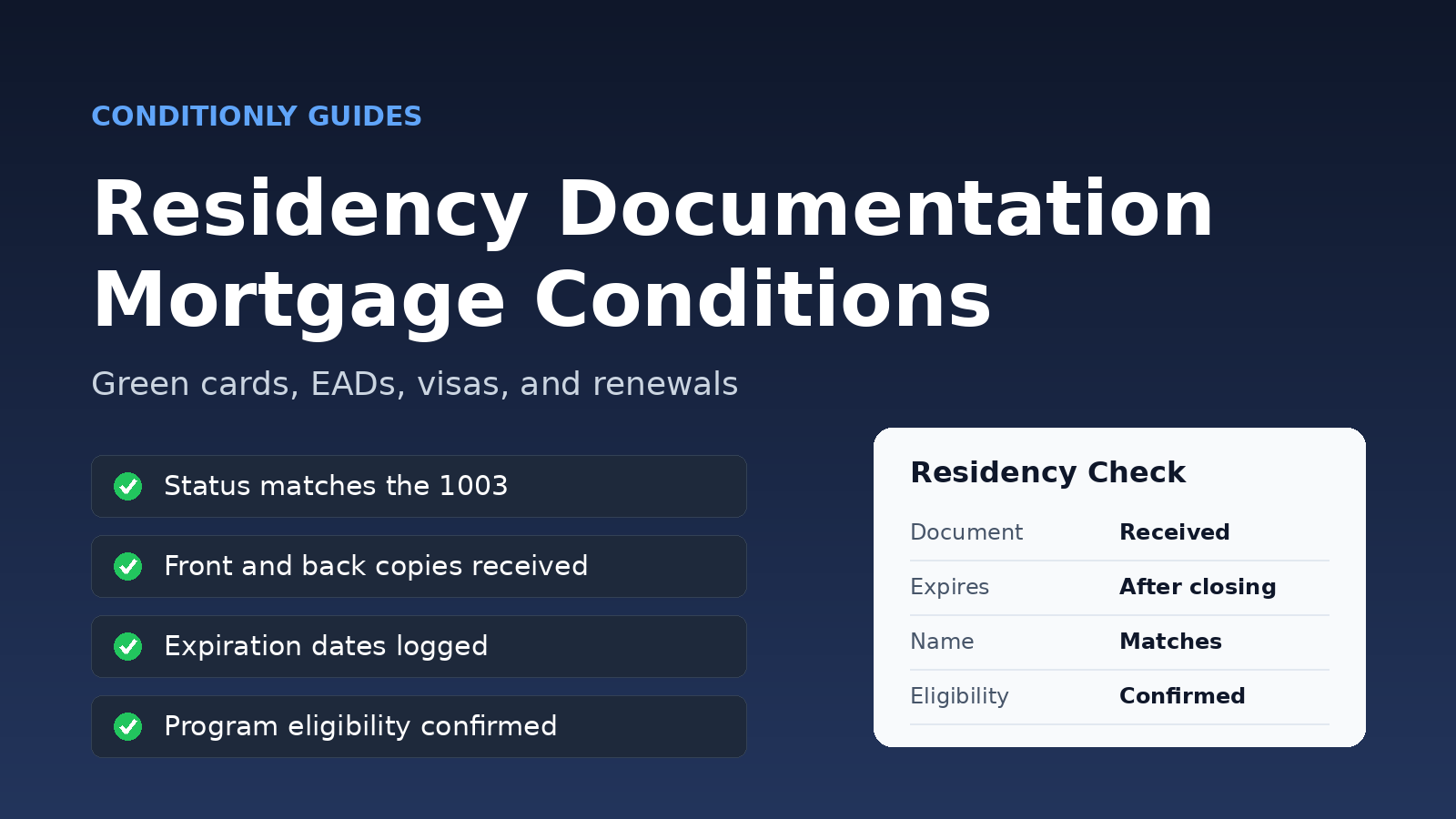
- Citizenship status on the 1003 matches the documents in the file
- Front and back copies of each residency document, fully legible
- Every expiration date logged and compared to the closing date
- Renewal receipt notices collected for anything expiring soon
- Names consistent across residency documents, ID, credit, income, and title
- Program and investor eligibility confirmed for the borrower's status
- LOEs collected for any gaps in status or work authorization
See how Conditionly helps mortgage teams request and track loan conditions.